From Total Loss to Renewed Space: What a Professional Fire Restoration Really Includes
When a fire hits, the damage can feel overwhelming: charred walls, the smell of smoke everywhere, ruined belongings, and waterlogged floors from putting out the flames. But, even when it seems like everything's lost, professional fire restoration can turn things around. This isn't just about fixing things up; it's about making your space safe and livable again, following a careful process that focuses on safety, thorough documentation, and long-term recovery. Let's dive into what you can expect from a modern fire restoration process.
We'll cover what an experienced restoration team does, why each step matters, how they handle water and mold issues, and the tools they use to get things right. If you're dealing with a fire right now, our team at Superior Fire Flood & More is ready to help you 24/7 with certified expertise. For more details on our services, including special fire recovery work, check out our fire damage restoration page.
Understanding "Total Loss": What That Term Really Means
What homeowners and insurers mean by total loss
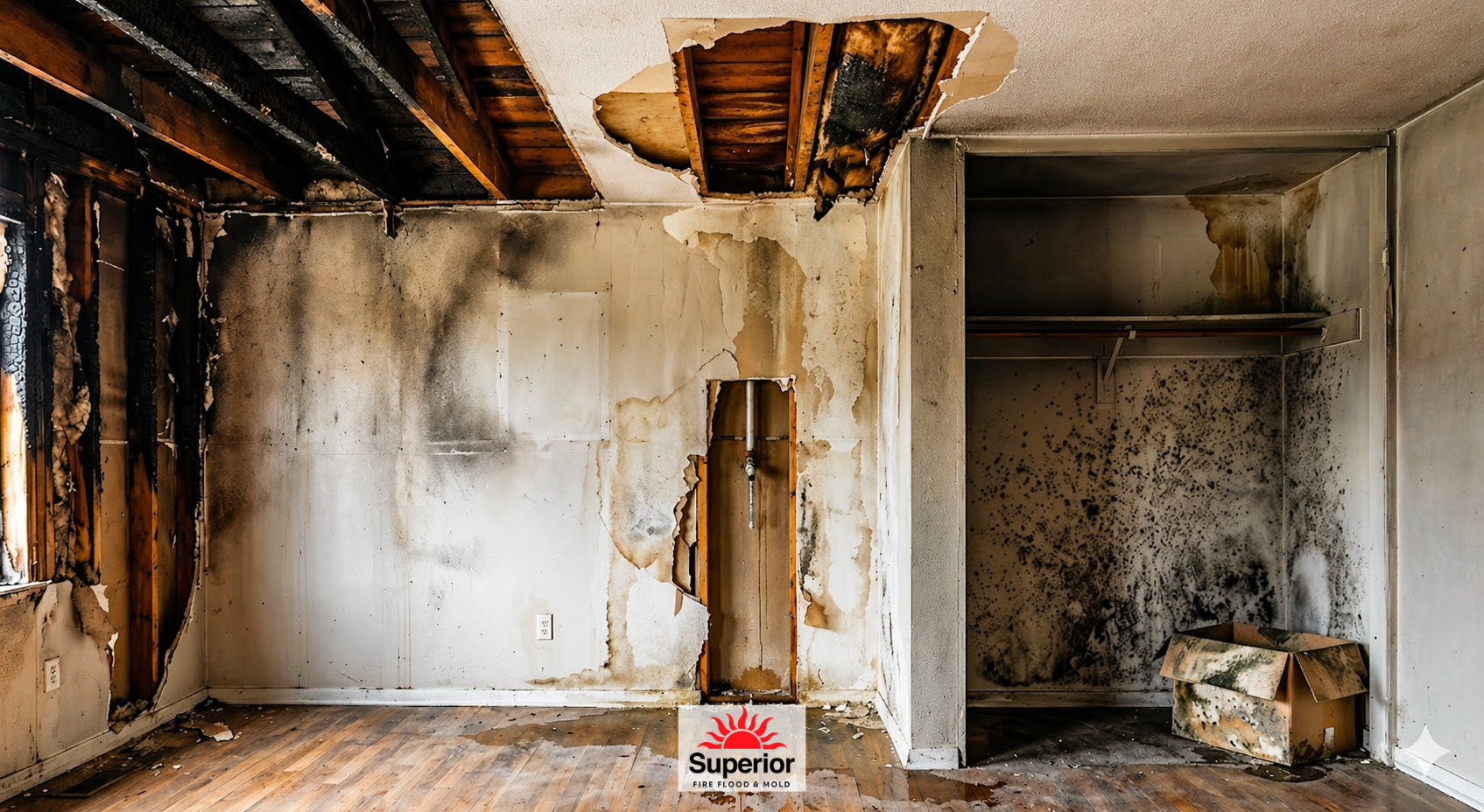
"Total loss" is a term used after a severe fire when the damage appears extensive. In insurance lingo, it might mean repair costs are too high compared to the property's value. But in the world of restoration, "total loss" isn't always the end. With some structural work, cleaning, and rebuilding, places that seem beyond repair can often be brought back to a safe, functional state.
Why early professional assessment changes outcomes
Getting experts on-site quickly can make a huge difference. They can spot what can be saved and prioritize actions to keep costs down. Things like boarding up the place, removing unsalvageable parts, and managing moisture right away help prevent further damage. Experts use industry standards and tools to distinguish between what's purely cosmetic and what's more serious, enabling focused recovery efforts.
Setting realistic expectations for recovery
How long and costly the recovery is will depend on the damage. Minor issues might be fixed in days, while more severe damage could take months. Knowing this upfront helps you coordinate with your insurer and plan for temporary living if needed.
Phase One: Emergency Response and Safety First
Initial stabilization and securing the property
After a fire, the first steps are about safety and security. Professionals will board up and fence off the area to keep it safe and protect what's left. This not only prevents vandalism or theft but also keeps the weather out and reduces risks from unstable structures.
Hazard identification and safety protocols
A certified crew checks for dangers like structural damage, exposed wiring, or hazardous materials. They follow strict safety rules to protect everyone involved during the initial cleanup. For more on handling fire-related hazards, industry standards and technical guides are invaluable resources (IICRC technical resources).
Coordinating with emergency services and insurers
Restoration pros work closely with fire investigators, building officials, and insurance adjusters to document everything accurately. Early communication helps speed up insurance claims and reduces misunderstandings. Detailed inventories and photo documentation ensure everything's covered.
Comprehensive Damage Assessment: Structural, Smoke, and Water
Structural integrity evaluation
Experts check for damage to load-bearing parts, weakened framing, and foundation issues. Sometimes things that look okay might still need reinforcement or replacement due to heat exposure. Engineers might be brought in to certify repairs and ensure they meet local building codes.
Smoke, soot, and content evaluation
Smoke can get into materials in different ways. Professionals test for soot deposits and decide what can be cleaned, restored, or needs replacing. Specialized cleaning techniques help save valuables and cut replacement costs.
Addressing water damage from firefighting
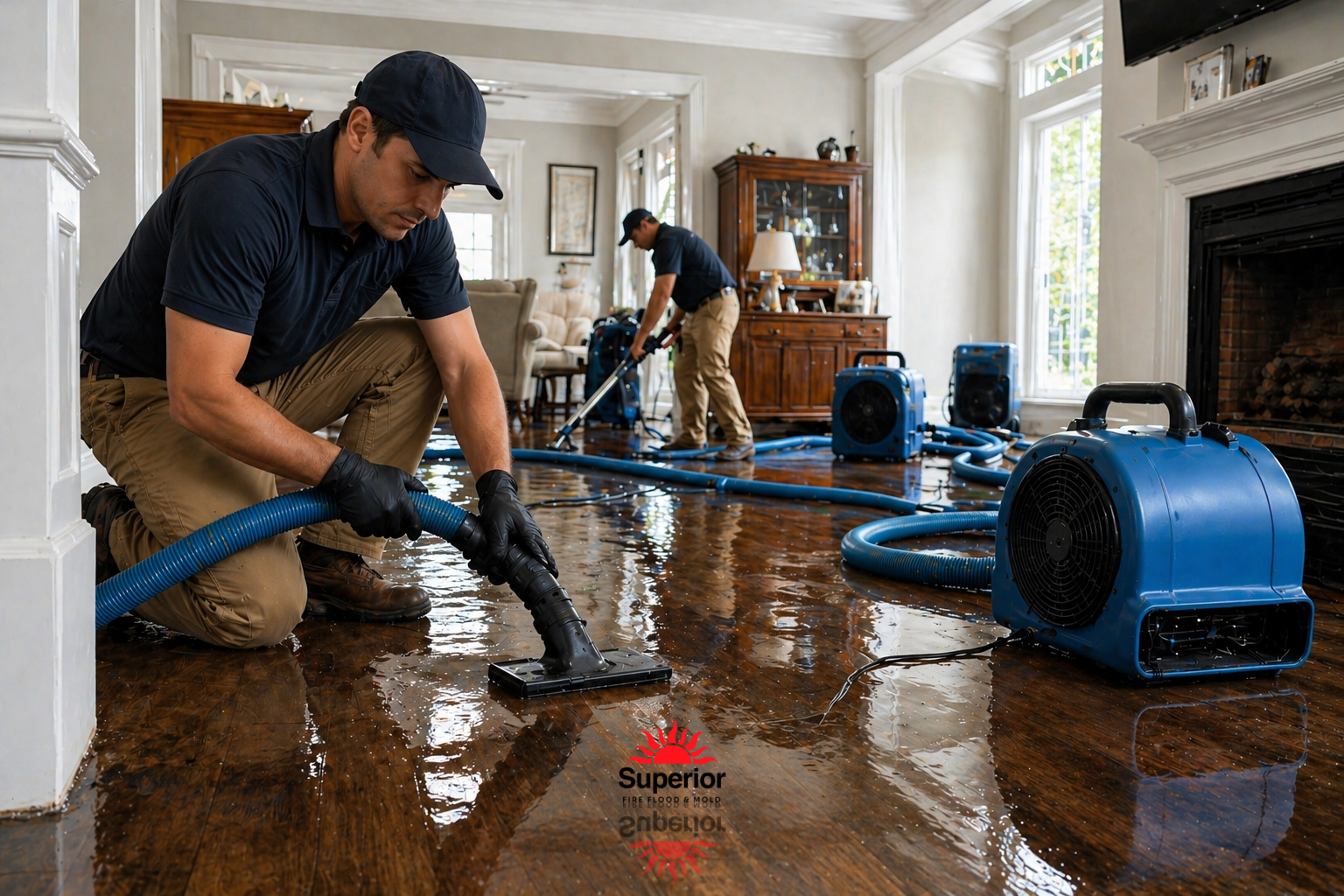
Firefighting leaves a lot of water behind. Quick water removal and drying are key to preventing mold and further damage. Restoration teams use pumps, extractors, and dehumidifiers to remove moisture efficiently. Advanced techniques like large-scale desiccant dehumidification are now standard practice (industry practices).
Documentation, Inventory, and Communication
Comprehensive documentation for insurance and restoration
Keeping accurate records is crucial. Pros document damage with photos, videos, and detailed lists. This helps with insurance claims and serves as a baseline for restoration work. Clear documentation means fewer disputes and smoother settlements.
Inventory and content management
Items are sorted for cleaning, storage, or disposal. Salvageable things might need special cleaning methods like ozone treatment for odors or ultrasonic cleaning for delicate items. Restorers keep track of everything moved off-site to protect owners and insurers.
Communication with homeowners and stakeholders
Clear communication reduces stress and keeps things moving. Restoration teams provide timelines, daily updates, and explain the process. They also help with insurance documentation and coordinate temporary living arrangements, contractor schedules, and inspections.
Mitigation and Controlled Demolition
Prioritizing mitigation tasks
Mitigation is about stopping more damage. It includes things like water extraction, tarping roofs, and removing hazardous debris. These actions stabilize the property and limit future repair needs, giving restoration teams time to assess and plan reconstruction.
When controlled demolition is necessary
Sometimes materials must be removed to prevent contamination or to allow structural repairs. Controlled demolition removes what's unsalvageable while preserving as much as possible, reducing rebuild costs.
Board-up, security, and environmental containment
Boarding up limits access and exposure to the environment. It also contains soot and dust during cleaning and demolition, protecting both workers and residents. These actions work with environmental controls and air filtration to keep conditions safe.
Cleaning, Decontamination, and Odor Control
Dry and wet cleaning methods for soot and smoke
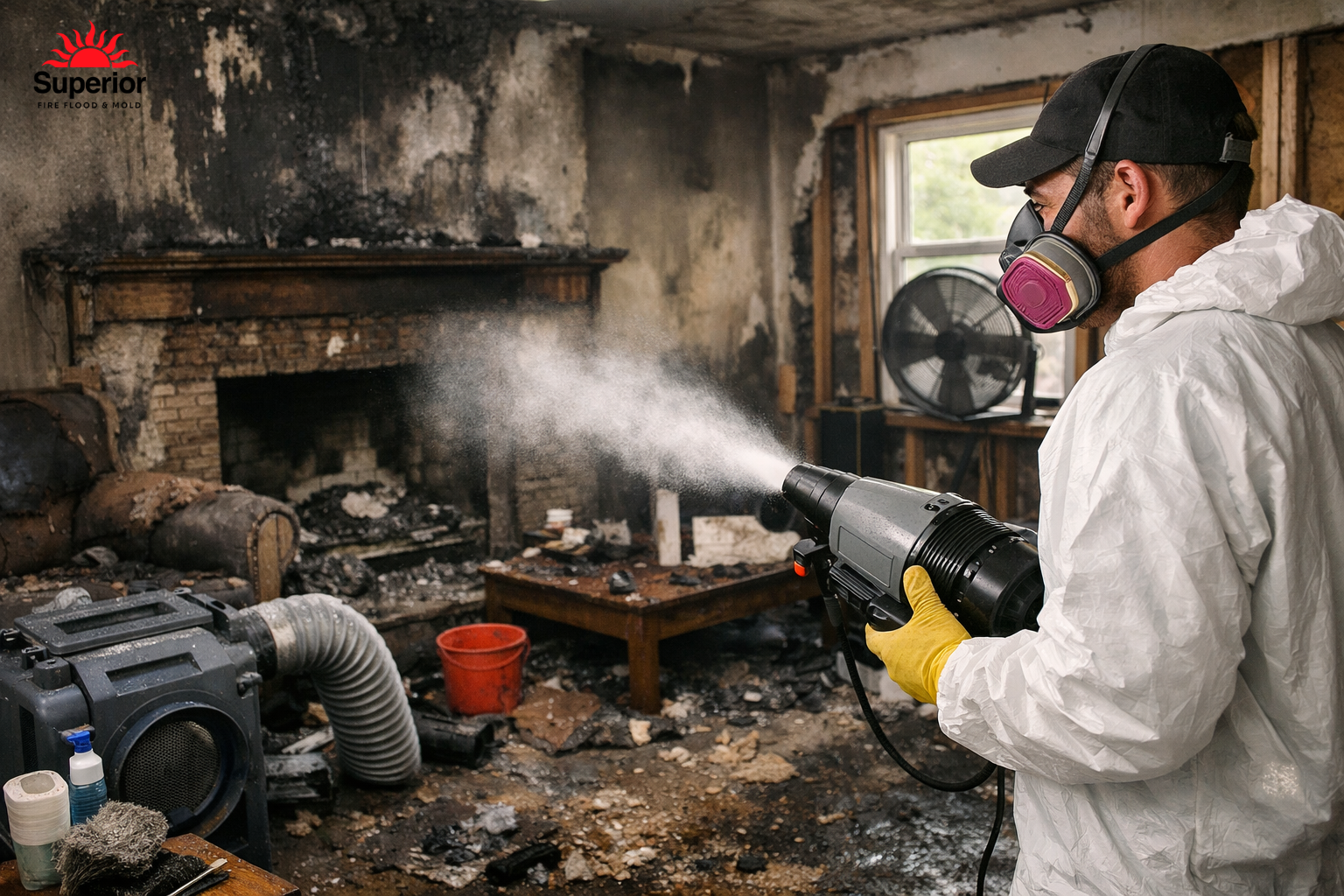
Cleaning methods depend on the soot type and material. Dry techniques like HEPA vacuuming might handle light soot, while wet cleaning with detergents tackles greasy residues. Technicians follow specific protocols to avoid further damage to delicate surfaces.
Chemical neutralization and odor elimination
Odor control involves removing sources, using thermal fogging, carbon filtration, and ozone or hydroxyl generation. These break down odor molecules instead of masking them. Effective odor removal often needs treating HVAC systems and building cavities.
Health-based decontamination considerations
Combustion by-products can include hazardous chemicals. Restoration teams follow safety protocols and industry guidance for decontamination. For complex cases, consult guides from standards bodies for safety (IICRC wildfire restoration guide).
Water Extraction, Drying, and Mold Prevention
Integrating water restoration into fire recovery
Fire restoration includes water mitigation because of firefighting. Quick extraction minimizes absorption, and drying plans set dehumidification targets. Restoration teams track moisture levels to ensure dryness before repairs.
Advanced dehumidification technologies
Technologies like large-scale desiccant dehumidification speed up drying, especially in cold climates or large spaces. These reduce mold risk and shorten project timelines by keeping humidity low.
Mold monitoring and remediation planning
Mold can grow fast in damp conditions. Restoration teams look for early signs and plan for remediation if needed. When mold is found, containment and HEPA-filtered air scrubbers ensure spores are removed. For more on mold services, check out our mold remediation page.
Structural Repairs, Reconstruction, and Code Compliance
Transitioning from mitigation to rebuild
Once things are stable and dry, reconstruction starts. This involves tradespeople like framers and electricians working from a clear plan. Restoration contractors manage schedules, inspections, and code compliance to ensure the rebuild meets standards.
Working with building officials and permits
Big repairs need permits and inspections. Restoration companies often handle permit applications and work with building departments to get approvals. Proper permits ensure compliance and future resale value.
Quality assurance and final verification
Final checks make sure everything's solid, systems work, and moisture issues are resolved. Restoration teams provide closure documentation and photos to give homeowners confidence that their place is safe and restored.
Case Study: From Total Loss to Renewed Space. Clarksburg Condominiums
Overview of the loss and restoration challenge
In August 2024, a condo complex fire affected 24 units. The large scale required quick action, thorough documentation, and coordinated mitigation to protect undamaged areas. This case shows the challenges of big residential restorations and the value of good project management.
Key actions and timeline
Restoration teams quickly stabilized the area, inventoried contents, and started drying and containment. The project needed selective demolition, extensive cleaning, and off-site content restoration. In 84 days, major progress was made to restore units, showing how focused management can speed up timelines (restoration industry example).
Lessons for homeowners and property managers
Big projects highlight the need for pre-vetted restoration partners, timely insurance communication, and clear temporary housing plans. Using documented procedures and regular updates leads to better outcomes and less time displaced.
Timelines, Costs, and What Influences Them
Typical timelines based on severity
Restoration timelines vary. Minor issues might be fixed in 3–7 days. Moderate damage could take 2–8 weeks. Severe cases might need 2–6 months or more, especially with reconstruction. Knowing these helps plan for costs and living arrangements.
Cost drivers and common price ranges
Costs depend on property size, repair extent, content needs, and local labor rates. Nationwide, costs range from $3,000 for small fixes to $75,000+ for big rebuilds. Many report averages between $10,000 and $30,000. Early mitigation helps keep costs down.
Insurance coordination and documentation tips
Provide insurers with complete documentation: inventories, photos, and repair plans. Clear documentation speeds up claims and payments. Restoration pros often work directly with adjusters to explain their findings.
Trends and Innovations Shaping Modern Fire Restoration
Data-driven risk assessment and predictive tools
Data science is changing how we assess fire risk. Tools like machine learning and geocoding help prioritize inspections and plan targeted actions. Research frameworks show how technology improves resource allocation and outcomes (research on predictive frameworks).
Enhanced drying and environmental control technologies
New dehumidification systems and monitoring platforms reduce drying times and provide proof of moisture removal. These help speed up the transition to reconstruction and reduce hidden moisture risks.
Stricter health and safety guidance
As awareness of chemical hazards from fires grows, industry bodies update guidance for worker and occupant safety. Following these protocols reduces liability and ensures thorough decontamination.
Frequently Asked Questions (FAQs)
How long does fire restoration take?
Timelines depend on the damage. Minor jobs: 3–7 days. Moderate jobs: 2–8 weeks. Severe or structural rebuilds: 2–6 months or more. Early mitigation can shorten these by preventing further damage and allowing parallel tasks like drying and content restoration.
Can smoke odors be permanently removed?
Yes, when contamination sources are removed and odor control technologies are used. Techniques like thermal fogging, hydroxyl or ozone treatment, and HVAC cleaning remove odor compounds instead of masking them.
Will my personal items be saved?
Many items can be salvaged with professional restoration, including electronics, textiles, and furniture. Items are evaluated for on-site or off-site restoration. Some porous or heat-damaged items might need replacing, but professional cleaning often saves more than expected.
What about mold after a fire?
Mold is a risk after water-involved firefighting. Quick extraction, drying plans, and monitoring limit mold growth. If mold appears, a remediation strategy with containment and HEPA filtration addresses the issue. For more actions following water intrusion, see our water mitigation page.
Practical Steps Homeowners Should Take Immediately After a Fire
Safety and documentation checklist
First, only enter a property when it's declared safe. Take photos and videos for insurance from a safe spot. Save receipts for emergency purchases. Keep a list of damaged items and save any documents or sentimental items if it's safe.
How to choose a restoration partner
Look for IICRC certification, experience with similar cases, clear communication, and references. A reliable firm provides clear work scopes, insurance documentation, and a safety plan. Local knowledge matters for compliance and effective restoration.
Preparing for the rebuild and returning home
Plan for inspections, permits, and temporary living needs. Keep communication open with your contractor and insurer. Request final verification documents before moving back to ensure a safe environment.
Conclusion: Turning a Crisis into a Renewed Space
Professional fire restoration is a step-by-step process that moves a property from crisis to a safe, renewed space. It involves emergency stabilization, thorough assessment, drying, cleaning, and reconstruction to address both visible and hidden damage. Modern tools, evolving standards, and better equipment have improved restoration speed and quality, reducing displacement times.
If you're dealing with fire damage, Superior Fire Flood & More offers 24/7 help, certified technicians, and expertise for every recovery step. Learn more about our water removal, mold control, and full reconstruction services on our fire damage restoration page. For immediate help, reach out to us or explore our service options including water mitigation and mold remediation.
For fire safety and mitigation guidance, check out the National Fire Protection Association at NFPA and federal resources like Ready.gov for emergency preparedness and recovery tips.
Ready to move forward? Contact Superior Fire Flood & More at (406) 519-3357 or visit our website for immediate help. We're here to help you turn a loss into a renewed, safe, and functional space with care and expertise.